
By Jaden Perry
Big changes might be coming to NABJ soon.
In a presentation to board members on Tuesday, the Strategic Planning Committee recommended a slew of changes, including increasing dues, requiring financial contributions from board members and shortening the annual convention. Dr. Sheila Brooks, who gave the presentation as chair of the committee, said the plan is still being revised and could be tweaked before the end of the year.
“We’re talking about the future, and we’re talking about financial sustainability. We have to think about the future of this organization,” Brooks told the board Tuesday. “We should not be having to think about how we pay bills year to year.”
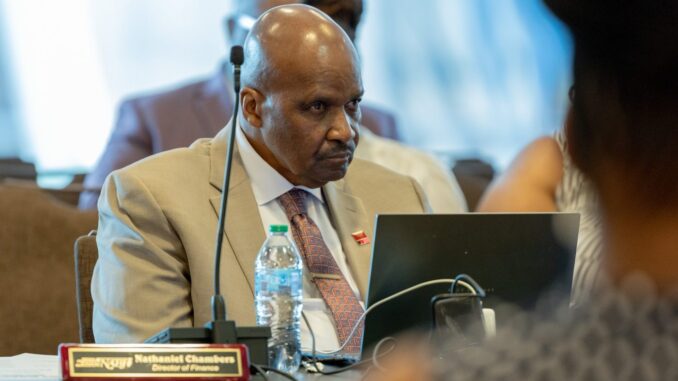
In a separate presentation to the board, the finance committee said the organization’s condition was stable heading into the convention. But nationwide cuts to DEI programs and a consolidating media landscape have exposed weak points in the organization’s funding model.
Media companies, which have been reliable funders in the past, aren’t doling out as much money as they did before, Brooks said. To reduce dependence on those companies, the strategic committee’s plan suggests NABJ focus on a broader base of funders like philanthropic foundations. According to Giving USA, donors gave over $600 billion to charities last year,
Another part of the problem is NABJ’s heavy reliance on its annual convention. About 90% of the organization’s revenue comes from the convention, according to the board. Attendees pay up $500 to register, while career fair booths start at $5,000. That dependence means a poorly attended convention or a drop in career fair participation could put NABJ in a shaky financial position.
“We have to be extremely, extremely mindful of every dollar and make smart moves because we can ill afford to have a negative loss at a convention,” said NABJ’s vice president of digital, Roland Martin, during the meeting.
The committee’s recommendations are aimed at addressing those vulnerabilities before they become a crisis.
Increasing membership dues, along with shortening the convention, could be a way to make that happen.
“We’ve kept it artificially low for years for both the membership and the convention registration,” said Rodney Brooks, chair of the finance committee and Dr. Brooks’ husband.
As for shortening the convention, Brooks said cutting the number of days could save on costs while remaining with common trends of other national organizations.
“We cannot continue to be a five to six-day convention. Nobody has those conventions anymore,” Dr. Brooks said. “We have to think about how we can cut that in half.”
To give members more value in return, Mr. Brooks said NABJ could offer additional benefits, including access to dental, group life, liability and pet insurance. He also proposed a branded credit card that could give NABJ a portion of purchases made with the card, though not enough to make a significant profit for the organization.
Another proposal included amending the constitution to require financial contribution from board members as part of their service.
“We give back in service,” Dr. Brooks said. “But we also need to give back monetarily.”
The proposal did not specify how much board members would be expected to give. Contributions could go toward specific NABJ programs, grants or scholarships, Dr. Brooks said. Financial commitments from board members would also make the organization more attractive to potential donors who often want leaders to have financial skin in the game, she added.
The board did not immediately push back on the recommendations presented Tuesday, but Sheila Brooks emphasized that the strategic plan is still being developed and that the board will ultimately decide which proposals to adopt.
Implementing any changes may have to wait for the selection of a new executive director, but Martin warned that NABJ should begin strengthening its finances before it is forced to do so.
“We need to be in a better situation,” Martin said. “So what you don’t do is you don’t begin to look at your financial situation when you’re in an emergency. You look at it now.”
Be the first to comment