
By Marian Amaria Bangura
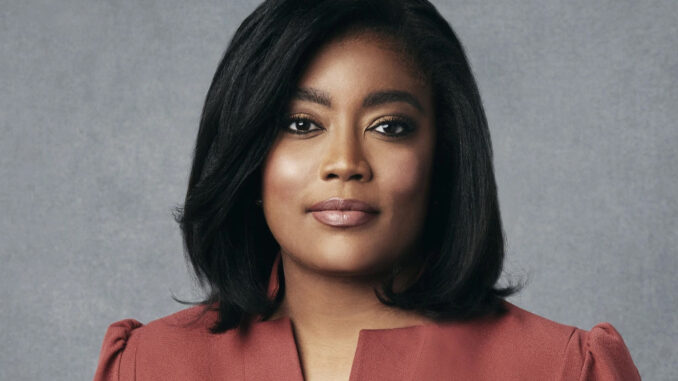
Tanya Black, vice president and news director at WJZ CBS in Baltimore, has spent more than three decades working her way through the newsroom. She started as an intern and moved through various roles before becoming a news director and vice president.
Even with an established career, Black’s journey hasn’t been linear.
“One reality I’ve faced throughout my career is the feeling that I have to continually prove myself,” Black said.
The news director has learned to meet others’ doubts with preparation and results. But her experience raises a broader question about what happens after Black women make it into leadership, and whether the companies they represent are prepared to accommodate their place in the workforce.
For Black women who have risen through the ranks of journalism, leadership has meant more than reaching the corner office. It has meant repeatedly proving their qualifications, pushing their workplaces to become more equitable and using their positions to shape decisions. Their experiences reveal how Black women are redefining what leadership looks like in the newsroom and the barriers that can remain even after they reach the top.
Newsroom leaders are facing an industry undergoing rapid change, from artificial intelligence and shifting audience habits to evolving company structures and shrinking newsrooms.
Adrienne Gibbs, chief storyteller at ASG Editorial Strategies and a former senior and managing editor at Ebony, said she has watched colleagues with less experience “leapfrog” her due to biased gender dynamics.
Gibbs, a mother of two, recalled a time when her workplace, which she didn’t disclose, did not have a designated space for breastfeeding.
“I had to go to my bosses and say, ‘I need a breastfeeding room,’” she said. Her bosses, she said, were reluctant to discuss it.
The experience changed the way she began to think about leadership. Sometimes, she said, leading means recognizing what others have overlooked, and being willing to push for change.
Rashida Jones, the former president of MSNBC and now CEO of Uncensored Jones, who became the first Black woman to lead a major cable news network, echoed this sentiment.
Jones said her identity has influenced the way she approaches critical decision-making. Those differences are not limitations, she said. They can become an asset when different perspectives are brought into the same room.
“I think it’s important for us as leaders, to not only create an environment where your teams all feel comfortable bringing their full selves,” she said, “but then you also contribute in who you are fully. There might be stories or ideas that I approach differently from my colleagues because I’m a Black woman or because I’m a mom or because I’m a wife.”
That becomes a bridge to creating more avenues for journalists from different backgrounds, especially as opportunities for Black journalists shrink.
Jernara Bussey, assistant news director at 13 News Now, said Black women cannot always wait for someone else to decide they are ready for leadership. They have to be willing to make decisions, take risks and put themselves forward.
“Get very, very, very comfortable with making decisions,” Bussey said. Her advice is equally direct for career momentum: “Show up for the opportunities.”
A seat at the table, however, does not tell the whole story. For these women, leadership extends beyond representation. It is not simply about getting Black women into positions of authority, but about giving them the confidence, space and authority to shape those positions once they arrive.
Be the first to comment