
By: Lizzy Nyoike
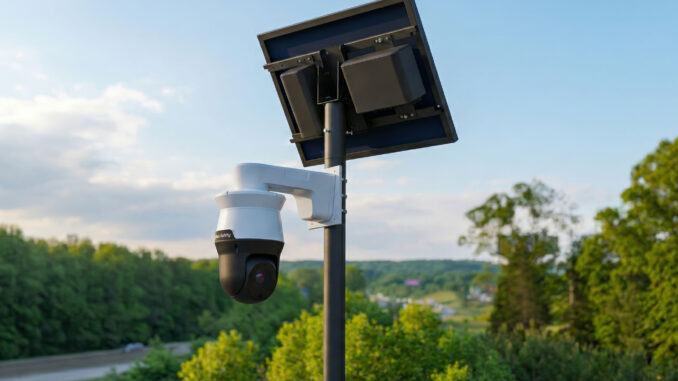
Flock Safety, an Atlanta-based company, has more than 60,000 public and private cameras mounted along parking lots, roads and intersections in Georgia that track and capture vehicle license plates as they pass, according to the Atlanta Journal-Constitution.
While there is no state law specifically governing the technology, Georgia statute allows law enforcement access to the network.
Its growing presence has raised concerns among privacy advocates and residents over how much information can be gathered about a person’s movements, how that data can be shared and what safeguards are in place to prevent misuse.
The Atlanta Police Department says it is conducting an audit of personnel usage of license plate reader technology to determine whether any employees have misused the system for personal reasons.
“The Atlanta Police Department values public trust in its use of all necessary tools and technology to help keep the City of Atlanta safe. The Department is currently conducting an audit of personnel usage of license plate reader technology,” the department said in a statement.
The department said it is unable to provide additional details at this time.
Flock Safety declined to comment for this story.
Ed Vogel, a member of DeFlock, an organization opposing the expansion of automated license plate readers, said the concern is that thousands of cameras can track a single vehicle’s movements across cities over time, building a detailed record.
DeFlock keeps an open-source map where users document locations of Flock cameras and other automated license plate readers across the country.
Vogel said the map was created to help people visualize the scale of surveillance within their communities.
“Having the map and being able to visualize how many cameras there helps people understand just how significant this surveillance infrastructure is,” Vogel said.
The organization encourages people to submit public records requests, attend city council meetings and question how surveillance technology is being implemented in their communities.
Vogel said a greater concern is what becomes possible when information from multiple cameras is combined.
“We don’t believe that there’s any way that these can be used safely, there’s no guardrails or safeguards that are meaningful and can actually prevent these cameras from being used for immigration enforcement, abortion monitoring, stalking, domestic violence, monitoring of protesters,” Vogel said.
He said the accumulated data can establish what he describes as a “pattern of life” by documenting where a vehicle appears over time.
Felix Bell, a Georgia resident who opposes the cameras, shared concerns about what widespread surveillance could mean for already marginalized communities.
“I am very nervous that flock safety is being used locally to limit the movement of peoples kind of generally,” Bell said.
Bell raised concerns during the 2025 budget season in Athens-Clarke County, Georgia, speaking at a budget meeting about the possibility of the technology limiting people’s movement.
Bell pointed to poor, Black, immigrant and disabled communities as populations that could be disproportionately affected.
His concerns extend to what happens when individual scans are compiled, creating a broader record of vehicle movement.
“When you’ve got your daily patterns of movement to everybody’s place of worship, schools, friends, family, workplace, that’s very intimate information that’s being logged and stored forever by a private company,” Bell said.
Bell also questioned the idea that people who follow the law should have little to no reason to be concerned about license plate surveillance.
“The reason that some people are fine with it and say, ‘if you’re following the law, you have nothing to worry about,’ is because they have the privilege to find those laws followable,” Bell said.
Vogel said the technology also raises concerns about how its use could change after cameras become established in a community.
“Once they’re installed, once they become infrastructure, whomever has control over them can use them however they want,” Vogel said.
Be the first to comment