
By Kimora J. Wong Sing
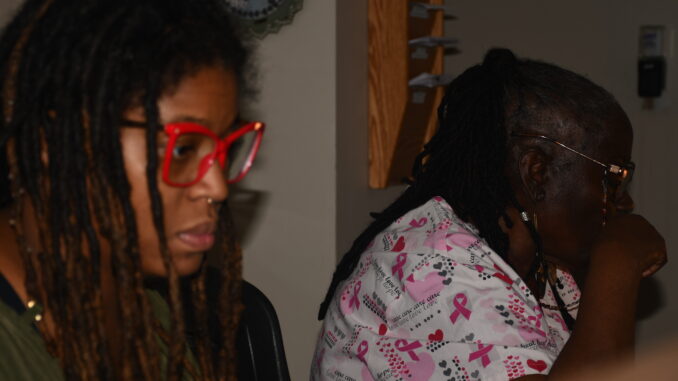
For Dr. Vernette Kountz, caring for mothers is personal.
Kountz is a physician, surrogate, birth worker and mother who says her own experiences have shaped the way she cares for the women who walk into her practice. Pregnancy, she said, cannot be separated from everything a woman carries: her family, her work, her stress and the support system around her.
“When I do come into the conversation with my moms and their families, I want them to tell me everything that’s going on,” Kountz said.
That perspective is at the heart of how Kountz approaches Black maternal health. She believes providers have to look beyond the pregnancy itself and understand the person experiencing it.
For Kountz, that work is more than a profession. “The calling chose me,” she said. That calling comes at a time when Black mothers continue to face disparities in maternal health.
In 2024, Black women in the United States had a maternal mortality rate of 44.8 deaths per 100,000 live births, more than three times the rate for White women, which was 14.2 deaths per 100,000 live births, according to the Centers for Disease Control and Prevention. The CDC also reports that Black women are about three times more likely than White women to die from a pregnancy-related cause, and more than 80% of pregnancy-related deaths are preventable.
Those numbers point to a larger question: What happens when mothers do not feel heard, supported or connected to the care they need?
For Kountz, the answer starts with building a community around each mother.
“Build your community,” she said. “Your team will carry you when you don’t feel like you can carry anything else.”
That team can include doctors, midwives, doulas, lactation consultants, pelvic floor therapists and other birth workers. Kountz said the goal is not for one provider to do everything, but for providers to work together and make sure mothers have someone advocating for them when they cannot advocate for themselves.
That need for personal connection is something Marsha Ford, a midwife with 33 years of experience, has seen throughout her career.
Ford said caring for mothers cannot be reduced to protocols, technology or a short appointment. Providers need to understand the woman sitting in front of them, including what she is eating, where she lives, what support she has at home and what she may be carrying emotionally.
“Let them feel that we care, because we sit and ask questions: How are things happening at home? How are you and your partner together? Is she with a partner? Is this a baby she really wanted? Was she raped? Any of these things. That is a real conversation, and you can’t get that in 15 minutes.”
Ford said while realizing the importance authenticity versus technology.
Ford said that kind of relationship is essential because every patient is different. “We need to have standards and have policies. But every patient is different,” Ford said. “You get to know that patient, you get to know what’s going on with her.”
For Ford, emotional care is part of maternal care. A mother may need someone who knows her history, understands her body and recognizes when something has changed.
That kind of individualized care is also what Atlanta-area birth workers and organizations are trying to provide. Midwives, doulas, physicians and community organizations are creating spaces where mothers can ask questions, advocate for themselves and feel seen throughout pregnancy and after birth.
But access to that kind of care remains a challenge across Georgia.
According to the March of Dimes, 42.1% of Georgia counties were classified as maternity care deserts in its 2024 report. The organization defines a maternity care desert as a county without a hospital or birth center providing obstetric care and without an obstetric clinician.
That shortage can mean long drives for mothers searching for care that fits their needs. Ford recalled patients traveling about two hours to Atlanta to receive midwifery care.
The Atlanta Birth Center announced that its current location will host its last birth on Sept. 30, 2026, as the organization transitions to satellite locations across metro Atlanta, effective Oct. 1. The move is part of a new care model designed to strengthen the center’s long-term sustainability. The center says it will continue providing prenatal and postpartum care while expanding options that include home births and planned hospital deliveries.
For mothers traveling hours to find care, the question is not simply where they will give birth. It is whether they will have somewhere to go where they feel heard.
For Kountz and Ford, the answer lies in making maternal care feel less like a transaction and more like a relationship, one where a mother is not just another appointment on a schedule, but a person whose voice, body and experience matter.
Be the first to comment